




Why Profitable Indian Businesses Run Out of Cash
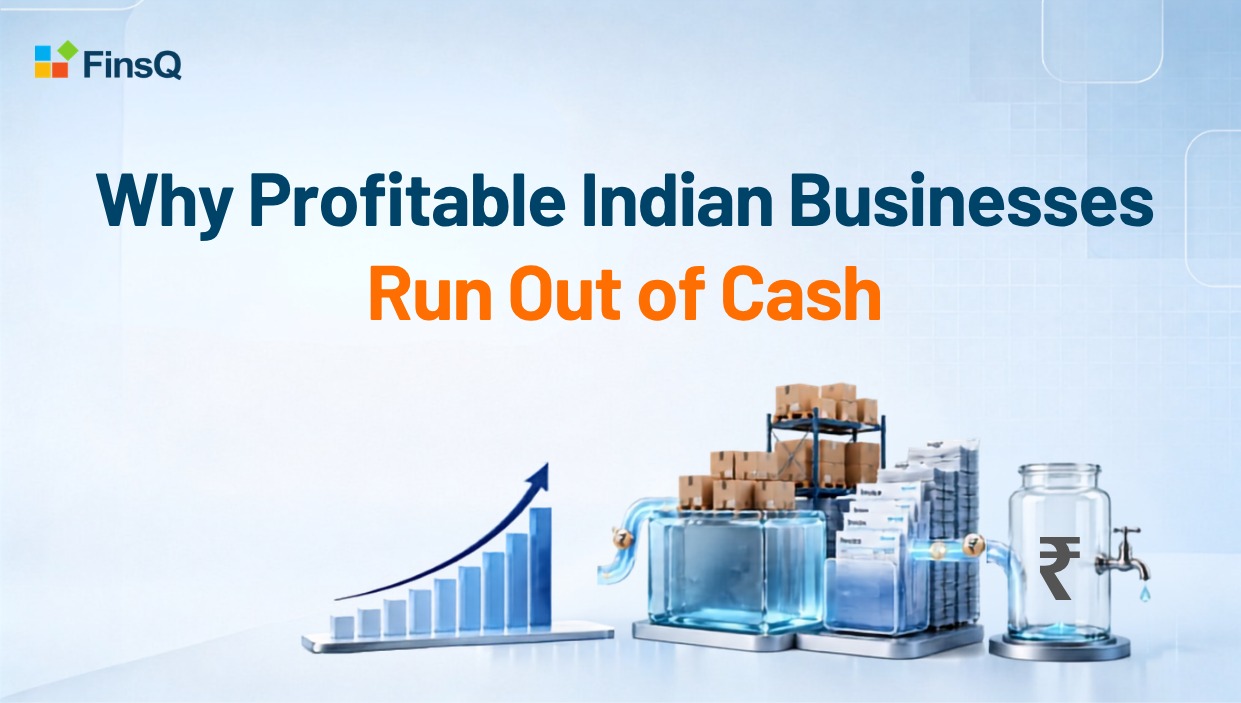
Every founder has heard some version of this sentence in a board meeting: “We’re profitable, so why are we struggling to make payroll?” It is one of the most common, and most avoidable ,crises in Indian business today. A business can show a healthy profit and loss statement and still be days away from a cash crunch. Profit is an opinion. Cash is a fact.
We have sat across the table from founders who built genuinely good businesses — strong margins, loyal customers, growing revenue, and still found themselves scrambling to cover a GST payment or a vendor invoice. It rarely happens because the business is failing. It happens because nobody was watching the plumbing while everyone was celebrating the growth.
The Gap Between Building a Business and Running Its Finances
Most founders are exceptional at building products, closing sales, and rallying teams. Very few are trained to read a cash flow statement the way a lender or an investor would. That is not a criticism it is a structural gap. A founder’s instinct is to chase growth; a CFO’s instinct is to protect the runway that growth depends on. When one person is expected to do both jobs, the growth instinct almost always wins, and the finance function quietly falls behind.
This is where the phrase “founder ≠ CFO” earns its place. Founders should not be blamed for not thinking like finance professionals, but businesses that never bring in that discipline, whether in-house or through virtual CFO services, are the ones that get blindsided.
Working Capital: The Silent Growth Killer
Growth consumes cash before it returns cash. Every new order, every new hire, every new market means money goes out first and comes back later — if at all, on time. Businesses that scale revenue without scaling their working capital planning often discover, too late, that they have grown themselves into a liquidity trap.
A few patterns we see repeatedly:
- Inventory is bought aggressively to meet demand, but no one models how long that cash stays locked in stock.
- Payment terms are extended to win a large client, without checking what that does to the business’s own cash cycle.
- Bank limits are treated as a formality rather than an active tool that needs renegotiation as the business grows.
None of these are dramatic mistakes. They are quiet, cumulative ones, and that is exactly why they are dangerous.
GST and Compliance: Not Just Paperwork
GST is often treated as a filing chore rather than a cash flow event. But GST liabilities, input credit mismatches, and delayed refunds directly affect how much cash a business actually has on hand at any given moment. We have seen businesses discover, mid-quarter, that a compliance oversight has frozen working capital they were counting on.
Compliance & regulatory discipline is not glamorous work, but it is the difference between a business that plans its cash with confidence and one that is perpetually reacting to notices, penalties, and last-minute filings. Founders who outsource this function properly, through outsourced accounting services or a dedicated compliance team, buy themselves something far more valuable than convenience: predictability.
Receivables: Growth’s Best Disguise
Nothing hides a cash problem better than a strong sales number. A business can post record revenue in a quarter and still be starving for cash, simply because the receivables are not converting into actual bank balance. We routinely meet founders who are proud of their topline and unaware that 60, 90, even 120 days of revenue is sitting uncollected on their books.
This is where many businesses realise, often under pressure, that finance needs a seat at the table that is equal to sales,not subordinate to it.
Why This Keeps Happening
The honest answer is that most growing businesses in India do not have anyone whose full-time job is to ask uncomfortable questions about cash. A fractional CFO services model exists precisely for this gap, businesses that are too complex to run on a bookkeeper’s spreadsheet, but not yet ready, or willing, to carry the cost of a full-time CFO.
This is not about outsourcing blame. It is about having someone in the room who is structurally incentivised to protect the business’s cash position, even when growth is exciting everyone else.
The Bottom Line
Cash problems rarely announce themselves. They build quietly, inside working capital gaps, GST timing mismatches, and receivables nobody is chasing hard enough. By the time a founder feels the pinch, the damage is usually months old.
At FinsQ, we have built our practice around exactly this blind spot helping mid-sized businesses and startups in India put real financial discipline behind their growth, through virtual CFO services designed to catch what founders, understandably, don’t have the bandwidth to watch.
If any part of this felt familiar, it might be worth a conversation. Reach out to FinsQ to talk about what a virtual CFO could do for your business.
FAQs
Q: We are profitable? why do we need virtual CFO services?
Profitability and liquidity are different things. Virtual CFO services exist to manage the gap between the two, so growth does not silently drain your cash reserves.
Q: At what stage should a startup consider a CFO service in India?
Typically once revenue, GST complexity, or receivables start requiring active management rather than basic bookkeeping, often well before businesses expect.
Q: Is a fractional CFO the same as an accountant?
No. Accountants record what has happened. A fractional CFO forecasts what is about to happen, to your cash, your compliance exposure, and your growth decisions , and helps you act ahead of it.
Q: Can outsourced accounting services help with GST issues too?
Yes. Done well, outsourced accounting services combine day-to-day bookkeeping with compliance & regulatory oversight, so GST and filings stop being a source of surprise cash outflows.