



Excel vs ERP: The Wrong Debate
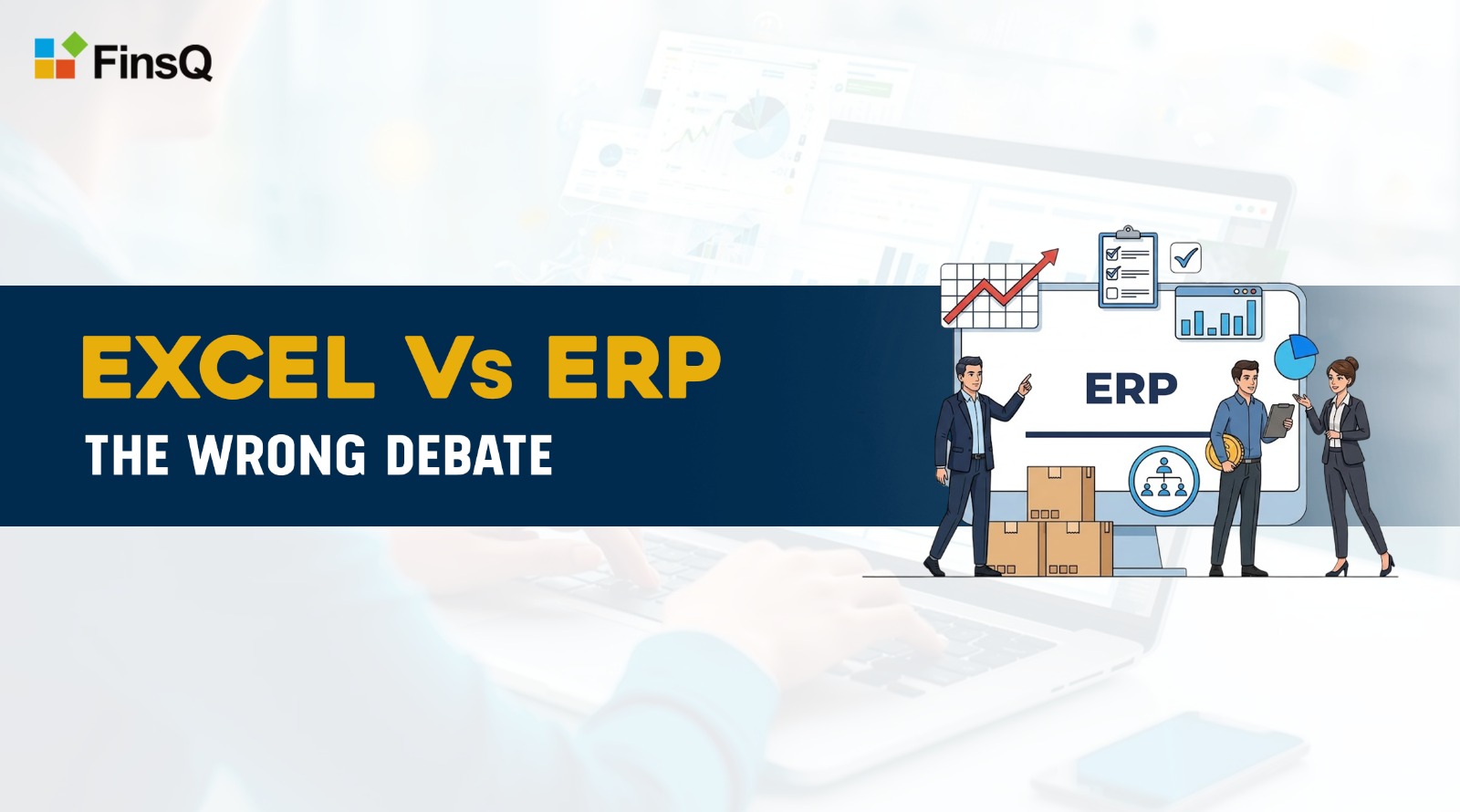
Every startup founder knows the moment of truth: cash is coming in, expenses are piling up, and someone asks, “Should we scrap Excel for an ERP?” It sounds practical, but it’s the wrong question. The issue isn’t which tool we use – it’s how we run finance.
In fast-growing businesses, spreadsheets feel flexible and familiar. But data scattered across separate Excel workbooks can hide errors, invite fraud, and make audits painful. In fact, a leading fraud study bluntly warns that “more than half of occupational frauds occur due to lack of internal controls”. In plain terms, manual processes leave doors wide open.
Debating Excel vs ERP misses the point. It’s not about choosing sides; it’s about architecture and control. Right now, many finance teams are literally stitching together dozens of spreadsheets. A recent industry survey found that 34% of SMB finance teams still rely mostly on manual processes. No surprise they’re exhausted.
Excel is not the enemy. The real problem is using Excel as a database. It doesn’t enforce integrity, handle concurrent updates, or maintain audit trails. When workflows depend on ungoverned spreadsheets, errors and compliance gaps grow.
A Better Framework for Scale
Instead of an either/or fight, founders and CFOs should ask: What finance architecture matches our stage and needs? Think of finance as a layered system, not a single tool. At the core is the system of record (your general ledger, ERP or accounting platform) – the place for every transaction, invoice and ledger entry. Around it you add integrated modules or best-of-breed apps (for payroll, inventory, expenses, etc). On the top layer sits analytics – Excel, BI tools and dashboards – where you analyze and model but never own the source data.
1.Core systems (ERP/GL):
These enforce controls and compliance. They ensure compliance & regulatory requirements (GST, tax, audits) are met with standardized flows. Imagine AP approvals, inventory tracking, or payroll – these belong in a controlled system, not a spreadsheet.
2. Integrated modules:
Specialized apps for specific functions (e.g. Tally, Zoho, QuickBooks, or domain-specific tools) that feed the ledger. They reduce manual work while letting you grow step by step.
3. Analytics layer (Excel/BI):
This is where finance teams live in Excel – reconciling, reviewing variances, running scenarios. Here you do ad-hoc analysis, forecasts and “what-if” calculations. The key: keep it connected. Pull data live from your systems, don’t retype it. Use Excel as a workspace, not as the source of truth.
This layered “Finance OS” approach means each tool does what it does best. ERPs handle transactions; spreadsheets handle the hard questions. As one finance veteran puts it, ERP systems “provide a great repository of data” and integrated processes, while Excel offers flexibility for on-the-fly analysis.
Focus on Controls, Not Shiny Toys
A provocative truth: blind faith in shiny software can backfire. Companies that sprint to a full ERP without processes often end up with a half-baked system and even worse chaos. Conversely, clinging to Excel forever invites risk.
What matters is rigor and governance. Tasks like payment processing and bank reconciliation don’t always require machine learning, they require well-designed workflows with clear rules”. The same goes for simple things like purchase approvals or expense audits. If you automate them thoughtfully, they reduce errors and fraud far more than arguing over tech names.
Here are some questions to guide the right framework (instead of Excel vs ERP):
1.How complex are our processes?
If you have dozens of interlinked spreadsheets for accounting, payroll, inventory or projects, it’s a red flag. Systems shine at integration.
2. How much audit and compliance oversight do we need?
In India, regulations (GST filings, TDS, ROC filings, audit standards) demand audit trails. Systems automatically log approvals and changes; Excel alone does not.
3. What do our stakeholders expect?
Investors and boards want timely, accurate reports. A structured system delivers faster, whereas Excel recon moves reporting off-cycle.
4. How mature is our finance team?
A founder juggling accounting in Excel may rely on “tribal knowledge”. With growth, you want documented processes, not person-dependent workbooks.
5. What’s the pain point?
Is month-end taking 2 days or 2 weeks? Are mistakes common? These symptoms hint at missing structure.
A bullet list might help here:
1. Overloaded spreadsheets: If you’re merging more than a few files each month, errors multiply.
2. Fragmented data: Sales in one sheet, expenses in another, reconciled manually – this breeds delays and mistakes.
3. Scattered reporting: Having three different “master” versions of the truth.
4. Scale triggering: Crossing ₹50–100 Cr revenue, or hitting multiple locations, usually demands more than spreadsheets.
When to Let Excel Play (and When to Upgrade)
Excel has its place. Use it for flexible modeling, dashboards and ad-hoc queries. Let finance experts manipulate data after it’s pulled from your systems. Keep your ERP or accounting software for repeatable, transactional work.
In practice, many startups evolve in stages. You might start with a simple accounting package plus Excel. At mid-growth, add automation (AP workflows, inventory software, HR tools). Finally, adopt a full ERP or integrated stack when revenue/business processes hit a threshold. The key is not the tool’s name but aligning tech with process.
Remember, sticking to spreadsheets long after they break can be toxic. We’ve seen businesses with hundreds of grumbling transactions a day still running on Excel – and the CFO sweating every quarter close. That’s asking for trouble. Equally, a half-implemented ERP can undermine trust and slow you down.
Human-Centered Finance
This isn’t an academic exercise. It’s about people doing their jobs well. An experienced CFO once told us: “The role of finance isn’t just to record transactions, but to interpret the numbers.” That doesn’t happen if your team is stuck reconciling manual entries every night.
Our view – as one of the best business consulting firms and virtual CFO Services provider – is that debate should shift from “Excel vs ERP” to “Have we built reliable finance systems that fit our business?” This means clear processes, frequent reconciliations, and a culture of checking and control.
Our own clients (through outsourced CFO services and fractional CFO support) often come to us with scattershot data. We show them how to embed controls first – for example, enforcing two-person approvals, implementing basic workflows, or even locking down critical sheets – then layer on tools. Only then can Excel truly complement the system without chaos.
Bottom line: Tools don’t fix broken processes, but good processes make tools work. Excel can survive – even thrive – alongside ERPs if used for its strengths. But when you hear someone say, “We can do everything in spreadsheets,” be wary. The real question should be: How can we structure our finance backbone to grow securely?
For businesses battling the Excel vs ERP conundrum, it’s wise to talk to experts who have seen both extremes. Our Virtual CFO team helps translate growth plans into a staged finance roadmap – leveraging both systems and spreadsheets appropriately.
If you’re scaling and want to strengthen your finance foundation, let’s connect. FinsQ offer strategic virtual CFO services (in India and beyond) that align your tools, processes and teams for reliable growth.
Get in touch to learn how our virtual CFO services can help build the right finance framework for your business.