




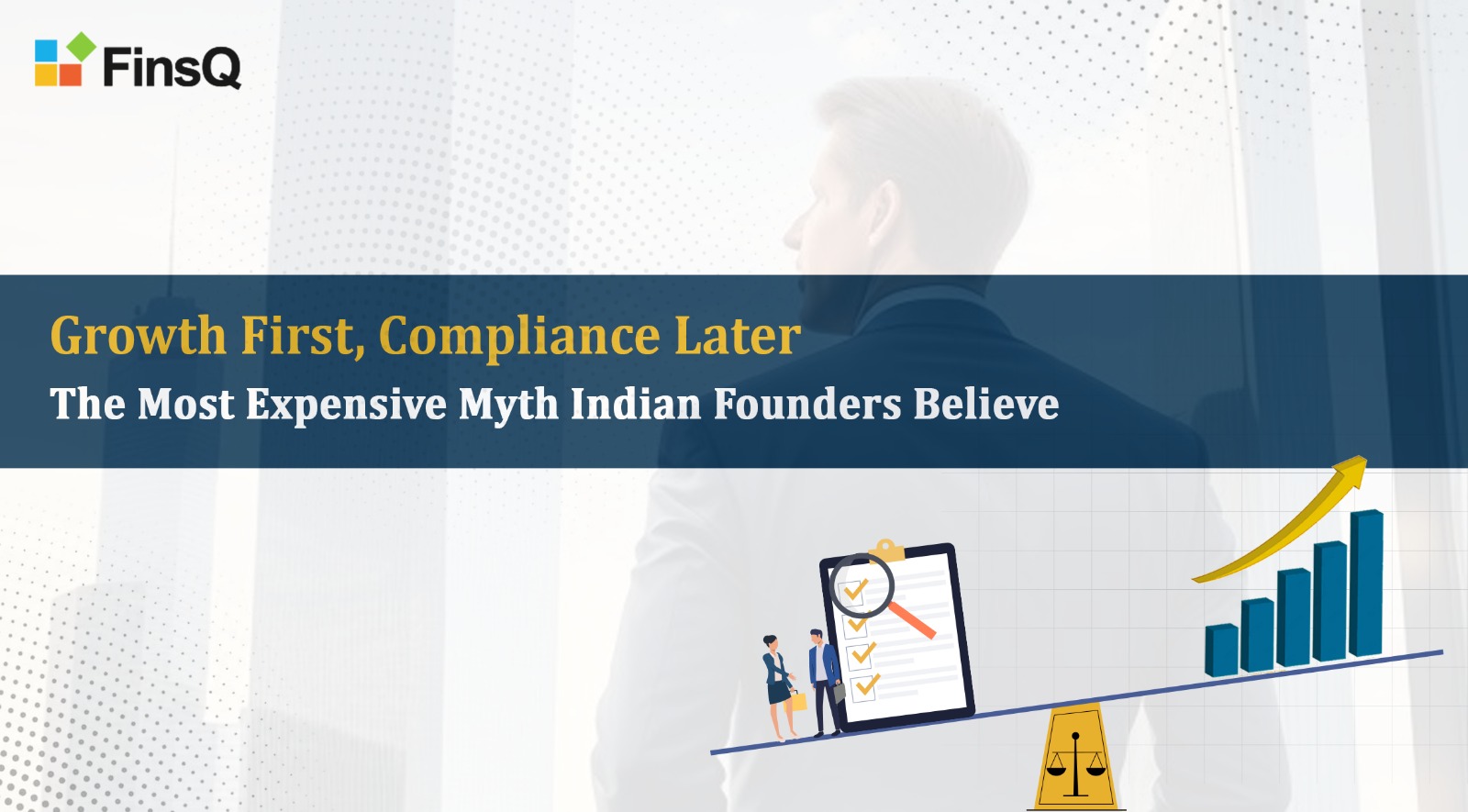
“Growth First, Compliance Later” – The Most Expensive Myth Indian Founders Believe
Founders, fueled by venture capital and initial success, fall prey to a common pitfall grow first, clean up later. It’s a tempting proposition. Money is tight, and the team is small. The only thing that matters is speed. Compliance, governance, and financial tidiness are politely swept into Phase 2, a phase that never seems to arrive on schedule.
History has proven this is a recipe for disaster.
In January 2023, GoMechanic’s co-founder publicly confessed that the firm had committed “we made grave errors in judgment as we followed growth at all costs, particularly in regard to financial reporting , which we deeply regret”. The aftermath was swift and merciless, an audit revealed discrepancies, a $75-80 million funding round fell through, and a massive layoff followed. Growth not only felt stalled but actually reversed.
This is not an isolated incident. CFOs, investors, and regulators have watched this same movie play out before. Acceleration on shaky ground always ends in the same place: the dead end of due diligence.
The Real Cost of “We’ll Fix It Later”
India’s startup story is littered with costly examples. Fashion-tech startup Zilingo went into liquidation after auditors uncovered serious inconsistencies in reporting to investors- unexplained payments, conflicting revenue numbers, and governance lapses at the board level. Byju’s – once the poster child of Indian edtech – also found itself under government scrutiny that highlighted governance gaps and opaque decision-making, even when fraud was not established.
These examples illustrate the tough truth that it is hard to bolt on compliance. Once issues come to light, the harm is already done. Bank accounts are frozen. Regulators are called in. Investors pull out. The management team’s focus shifts from scaling to firefighting.
Founders think that by skipping compliance, they save time and money. But the truth is, it only delays costs and multiplies them.
Compliance Is not the Enemy of Growth
The premise that compliance hinders growth is a false alternative. What investors look for today is audit readiness, not a nicety. One missing filing, one tax risk, or one unorganized cap table can derail or destroy a deal.
Legal and investment counsel alike have noted that startups with clean records close deals faster in fundraising. A strong compliance profile demonstrates maturity, soundness, and scalability. It indicates to investors that growth is not happenstance but a deliberate and sustainable strategy.
In this perspective, governance is not red tape. It is infrastructure.
Startups that view compliance as a runway, not a speed bump, are not surprised at the last minute and negotiate from a position of power. The smartest founders don’t wait until due diligence to uncover holes; they anticipate it and plan for it.
Founders think that skipping compliance will save time and money but in reality it only delays expenses and multiplies them.
The Hidden Drag on Momentum
There are also quieter costs to neglecting compliance.
Delays in funding due to poor documentation can go on for months. This is time spent on recreating documents, re-presenting financials, or addressing regulatory notices.
A company’s non-compliance with Indian laws such as the Companies Act, FEMA, or GST regulations can result in penalties, nullification of transactions, or investigations. Even after the problem is fixed, the damage to reputation remains. Investors recall painful due diligence experiences. So do potential acquirers.
The irony is that the time spent firefighting non-compliance often dwarfs what it would have taken to do things right in the first place.
Audit Readiness as a Strategic Advantage
When compliance is embedded early, it becomes a competitive edge. Businesses that maintain structured documentation like statutory registers, board resolutions, contracts, cap tables, IP records, can move quickly when opportunity knocks.
Whether it is a funding round, acquisition, or market expansion, audit-ready businesses execute faster. Regular internal reviews catch small issues before they snowball. Founders gain clarity into unit economics, cash flow, and risk – clarity that directly improves decision-making.
Some of India’s most enduring businesses built their reputations on this foundation. Infosys, for example, scaled globally with governance and transparency as core principles. More recent success stories, like Zerodha, emphasise discipline and risk controls as much as growth.
The lesson is simple: businesses do not fail because they took compliance seriously too early. They fail because they took it seriously too late.
The CFO Lens: Doing It Without Overhead
The good news is that strong compliance does not require a bloated finance team. Many growing businesses today rely on outsourced accounting services, virtual CFO models, or fractional CFO services to build structure without excessive cost.
These setups provide experienced oversight for example covering bookkeeping, regulatory filings, internal controls, and audit coordination, while allowing founders to stay focused on growth. Compared to the cost of a failed fundraise or regulatory action, this investment is marginal.
In the Indian context, access to high-quality CFO service in India has made it possible for startups and mid-sized businesses to professionalise finance early, without committing to full-time senior hires.
The Takeaway
Growth and compliance are not mutually exclusive goals. One drives the other.
The myth that “compliance can wait” feels harmless in the early days, but it often surfaces in the worst possible moment, when capital, credibility, and momentum are on the line. Businesses that scale smoothly are not the ones that grow the fastest at any cost, but the ones that grow with intent, discipline, and foresight.
If growth is your ambition, governance is not optional. It is part of the strategy. And the best time to take it seriously is long before someone else asks you to.
Audit readiness and compliance discipline don’t need a large finance team it just needs the right expertise at the right time. Virtual CFO services and fractional CFO services help growing businesses build structure without slowing momentum.
FinsQ, a trusted CFO service in India, partners with founders and CXOs to stay prepared well before due diligence begins.
Connect with FinsQ to explore Virtual CFO Services and build growth that lasts.